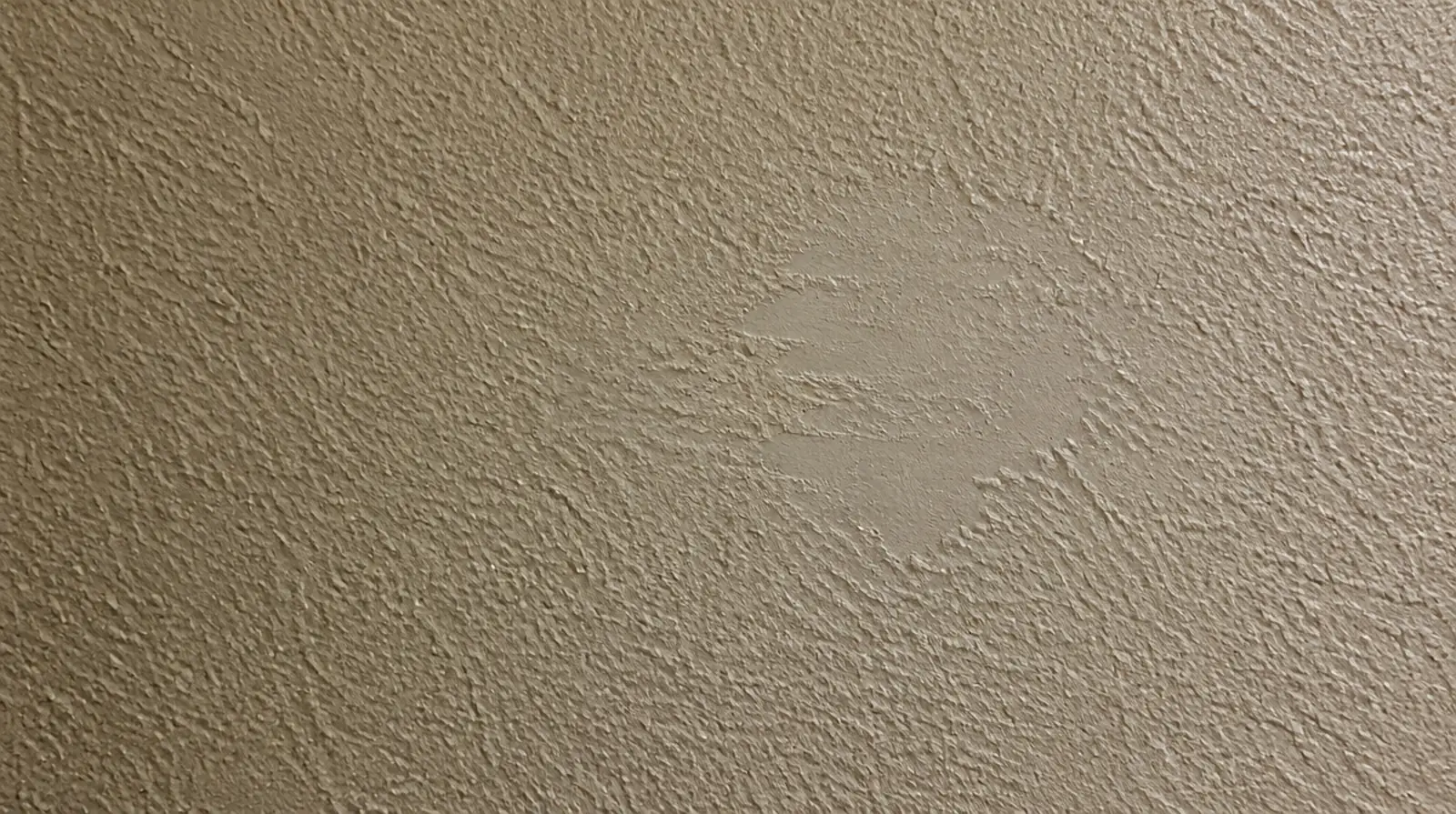
Set realistic blend expectations
Age, paint buildup and irregular original application can limit how closely a patch can blend. A wider wall treatment may be worth discussing if a localized repair remains conspicuous. For a limited patch requiring substantial setup, assess the complete package of access and protection instead of relating cost only to the opening size.
Use appropriate primer
A new texture and the painted wall around it can take up paint unevenly. Choose suitable primer to support the coating system without unnecessarily flattening the intended pattern. When more damage could be hidden, ask how any added scope will be documented before extra material is removed or replaced.
Prepare a sample area
Use a limited trial to compare the scale, distribution and flattening of the proposed finish. Reviewing the sample before coating the full repair reduces uncertainty about the expected blend. At a repair beside an opening, allow clearance for moving board through the doorway and space to use the finishing tools effectively.
Control application conditions
Spray settings, material consistency and working distance all influence the resulting texture. Room conditions and drying rate also influence when a knockdown pass should be made. When reviewing the finished work, use the agreed lighting and natural room viewpoints so the assessment reflects the intended use of the space.
Allow time before painting
Applying paint before the texture has dried can disturb the pattern or produce uneven absorption. Establish whether the proposal includes that decorative stage or hands the surface over to another trade. When reviewing the finished work, use the agreed lighting and natural room viewpoints so the assessment reflects the intended use of the space.
Study the paint layers
Older paint coats may have filled or rounded the original texture profile. Matching the wall surface as it looks now may require a differing application from the pattern that was first installed. At a surface receiving strong window light, review a dried trial from the side in addition to the normal straight view of the wall.
Identify the existing pattern
First determine how the current texture creates its pattern and relief. Examine the surface in the light the space actually receives before choosing a spray or hand applied method. When damage followed other building work, describe the nearby alterations and the sequence between those changes and the first visible defect.
Consider hand applied surfaces
For a troweled pattern, the tool movement and the spacing between its marks matter. A representative trial is useful when there is no standard machine setting that reproduces the original finish. For an older repair with no clear history, describe when the mark first appeared and whether it has changed through more than one season.
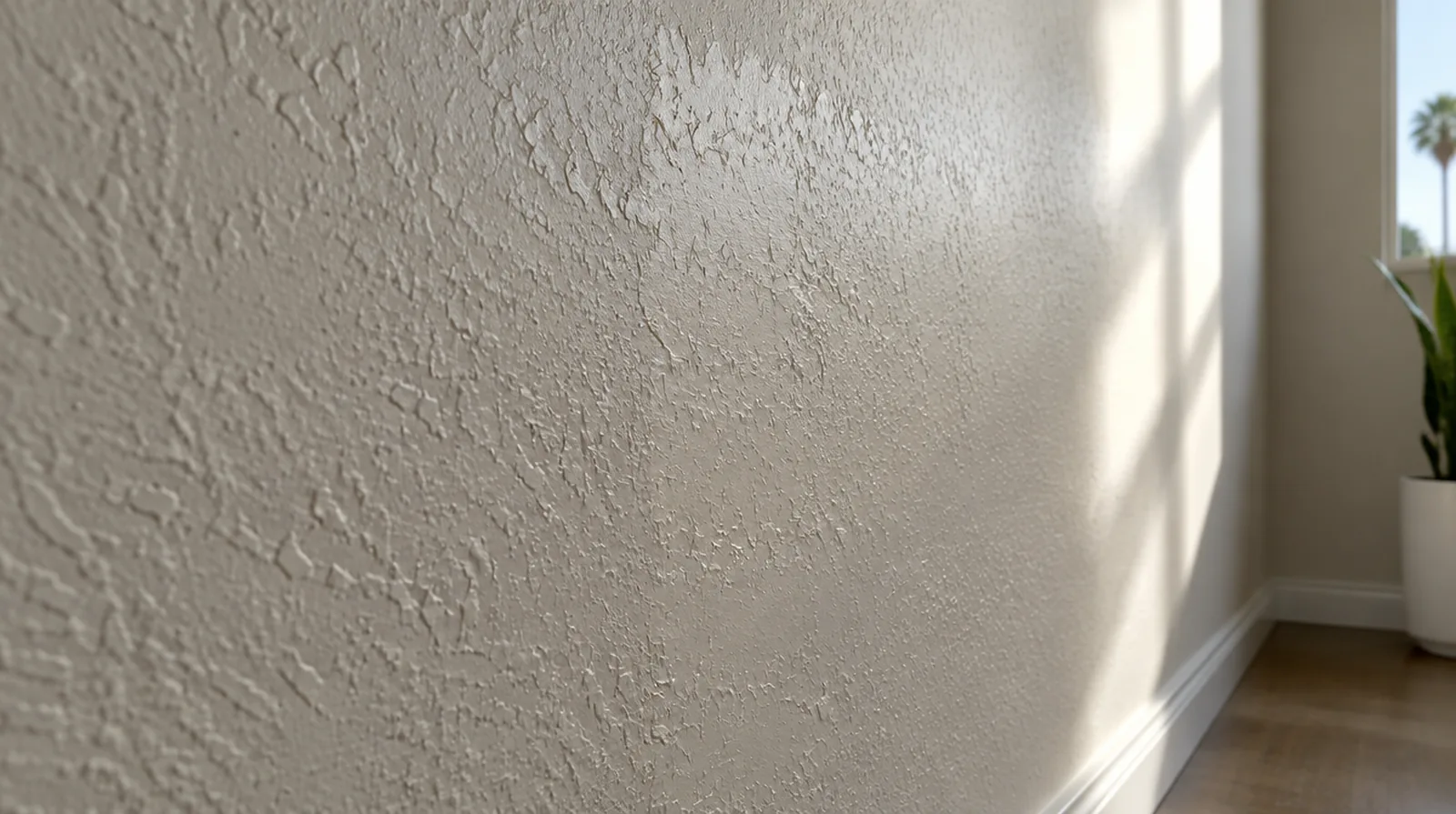
Judge from normal positions
Assess the dried texture from everyday viewpoints rather than judging only a close view of a wet sample. The planned paint sheen and oblique light both belong in the final appearance discussion. At a surface receiving strong window light, review a dried trial from the side in addition to the normal straight view of the wall.
Protect surrounding finishes
Mask adjacent materials against sprayed compound and other application debris. Protect the full reach of the operation, including fittings and trim beyond the original damaged spot. Where a surface has been painted many times, consider whether differences in texture or sheen will require a wider decorative treatment.
Project context in Ontario
A written boundary for primer and paint makes it easier to compare a drywall proposal with the complete decorative result you have in mind. If afternoon light crosses the surface, judge the proposed finish under that condition rather than only under overhead work lighting.
Scope questions before finishing
At a surface receiving strong window light, review a dried trial from the side in addition to the normal straight view of the wall.
When the wall has strong reflected light, look at the full plane instead of judging only the narrow strip immediately beside the patch.
When the decorative coating has been selected, tell the finisher its intended sheen and color while the preparation of the surface standard is still being agreed.
When the work area includes a doorway, check the clearance for panel movement as well as the amount of space available for finishing tools.
When building management controls access, agree delivery hours and common area protection before committing to a start or finish date.
If the surface condition is uncertain, allow for an assessment that can distinguish stable material from layers that should never be covered.
When reviewing the finished work, use the agreed lighting and natural room viewpoints so the assessment reflects the intended use of the space.
For a room that stays in use, set a workable boundary around construction while retaining the access people need for normal daily activities.
For a wall receiving a decorative covering, provide its preparation requirements early enough for the drywall finish to support that product.
Where a neat final edge matters, agree whether the finish ends against existing trim or whether that trim will be removed and replaced.
Where the wall surface meets fixed furniture, clarify whether removal is included or whether the finish will terminate at the accessible edge.
For a distinctive existing pattern, retain a reference sample or detailed picture to make the matching discussion more specific.
Explore the Ontario drywall overview for related options, or read the project planning information before arranging the next stage.
More planning details for Ontario
Ontario property improvements often involve a simple practical question: what will this wall look like when the room is back in daily use? Describe any wall mounted items that will be removed or added, because backing and outlet adjustments are easier to coordinate before finishing. Material delivery also needs a route with enough turning space for the selected sheet size.